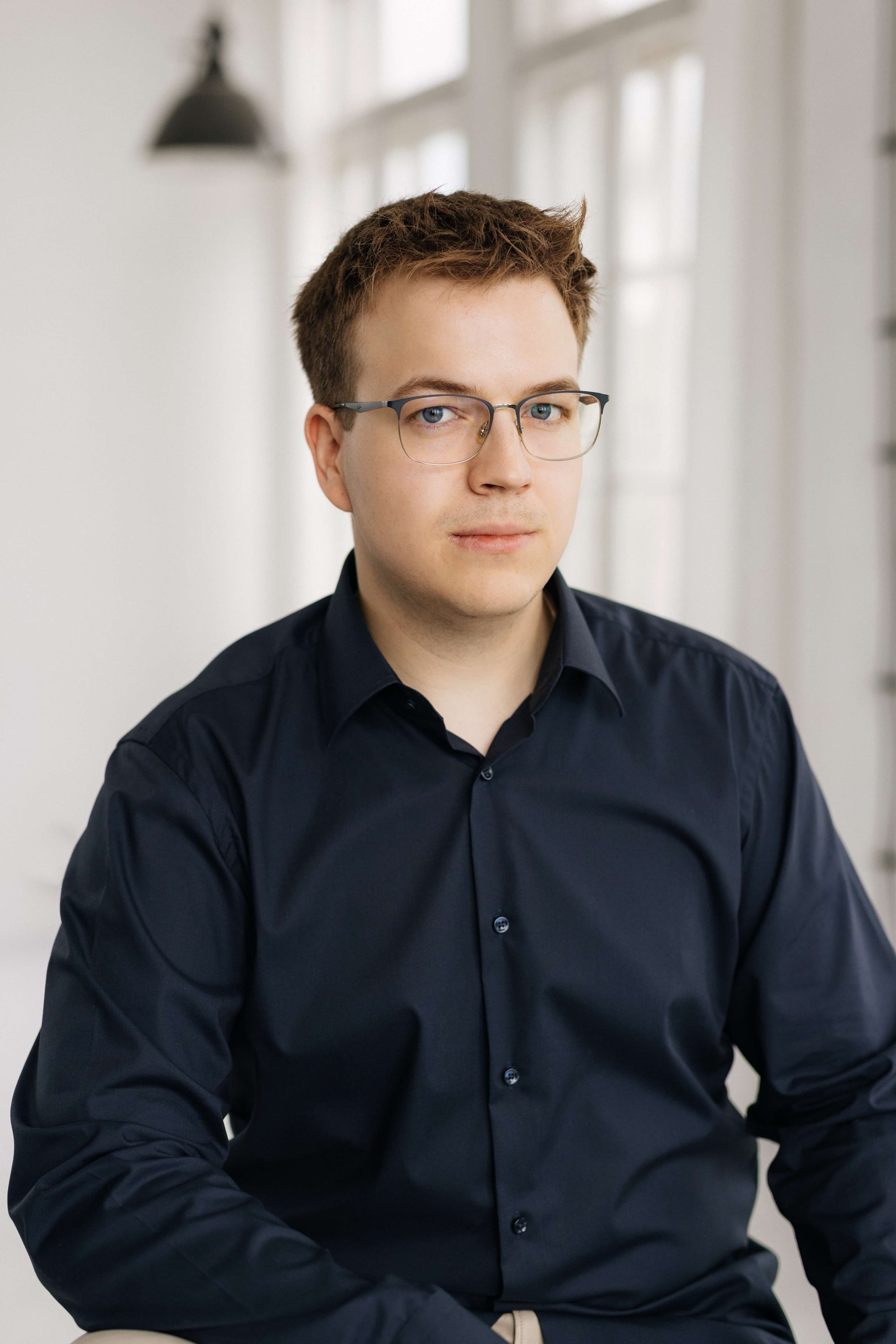
Mateusz
Bochyński
Architect · Agentic Engineer · Creator
I've always been more drawn to the system behind a drawing than to the drawing itself.
For years I lived with an internal block, meekly reproducing other people's visions as a passive draftsman, even though manual clicking went against my nature. Artificial intelligence broke that wall and showed me that instead of accepting imposed frameworks, I could ask how a system works and how to build it. Today I work as an Agentic Engineer, combining architectural aesthetics with process engineering. I see a striking similarity between the conceptual modeling of a skyscraper's mass and modern product design: both processes start from a pure idea and sculpting abstract material, until they finally take on a functional form.
For a long time I believed an architecture degree was a rigid cage where the only allowed task was drawing buildings. Yet my mind always pulled toward the macro scale: urban planning, infrastructure, and the logic of complex networks. I see the world and my own work as a continuous flow of data, where the point is to find the bottleneck. This ruthless optimizer's instinct was forged during hardcore raids in World of Warcraft, where survival depended on the mathematical min-maxing of stats, and in simulations like Factorio, where I spent hours testing system efficiency.
My method is craftsman-style assembly: putting together solutions from available parts through constant trial and error. I don't chase theoretical ideals, I flexibly test combinations until the system works exactly the way I planned it. For me, real satisfaction lives in a thousand small, winning interactions with code, day after day. That variety pushed me away from predictable boredom toward the dynamic AI environment that gives me new intellectual stimulation every day.
When working with language models, I follow one rule: I assume AI doesn't know that it knows. Models lack self-reflection and the capacity for doubt, so they speak about facts and confabulations with the same certainty. That's why I become the consciousness they lack. Before I assign any task, I gather sources myself, synthesize them into complete context, and hand the AI precise boundaries where it can operate without guessing. I set the direction. The model is my hands at the keyboard.
Through the collision of architecture with code, I discovered what drives me most: the moment of a product's genesis. Inventing new logic, sculpting in 3D geometry, and building prototypes that bring order to the chaos around me. That's my element, and these are exactly the kind of environments I want to build around me: aesthetically coherent, technically efficient.